




AI Deal Guides: Finally, the Fix for Stalling Deals and Lost Momentum



Most deal guidance focuses on the opportunity, the risk, and the stage. It reads the deal well. What it never reads is the person being asked to close it.
"I can see pipeline risk, but I don't know where execution is breaking down."
“Pipeline reviews tell me what happened, not what needs to change.”
"The information I need is spread across too many tools.”
We're no mind-readers, but odds are one of these brought you here. Maybe all of them. Maybe a few more we'll get to shortly.
Now take a deal from last quarter. It opened on a strong call, went quiet by week six, and stretched a 30-day cycle into 90, all while the deal signals, the engagement scores, and the risk flags sat in plain view the whole time.
Because knowing what’s wrong with the deal isn't the same as knowing what the seller needs to do about it.
That’s where today’s deal guidance falls short.
It can tell you what’s happening in the deal and what the seller should do next. But it doesn’t account for whether the seller is ready to act on that guidance.
Good deal guidance has to understand both the deal and the person closing it. Mindtickle's AI Deal Guides is the first to do that.
What is AI Deal Guides, and what problem does it solve
Deals are only getting harder to steer. Gartner finds that a typical B2B purchase now pulls in six to ten stakeholders, each with their own priorities. Every added voice is another place the deal can stall, and another moment where a timely intervention is the difference between momentum and silence.
AI Deal Guides is built for those moments. It keeps a deal moving even as the room gets crowded by reading two things at once: the deal and the seller working it. It combines what's happening in the opportunity with what the rep is actually equipped to do, and turns that into the next action.
How AI Deal Guides works
Reps' job is selling. But the average seller spends <30% of the week actually selling. The reasons probably sound familiar, and they're likely part of what brought you here, alongside the ones we opened with.
- "CRM tells my reps the next step, but not necessarily the right next step."
- "The information my reps need is spread across too many tools."
- "My reps have to leave their workflow to find content, prepare, or take action."
Until now, this has quietly been the rep's job. Not the selling, the work around the selling. Connecting the signals, chasing down context, pulling the right content, drafting the follow-up, then starting over on the next deal.
None of it is customer-facing. All of it sits in the gap between knowing what a deal needs and actually acting on it. And every hour a rep spends bridging that gap by hand is an hour they're not in front of a buyer, having the conversation that moves the deal.
That gap is where AI Deal Guides works, so the reps don't have to. It runs as a continuous loop, a deal execution engine that turns raw signal into the next move, then learns from what happens.
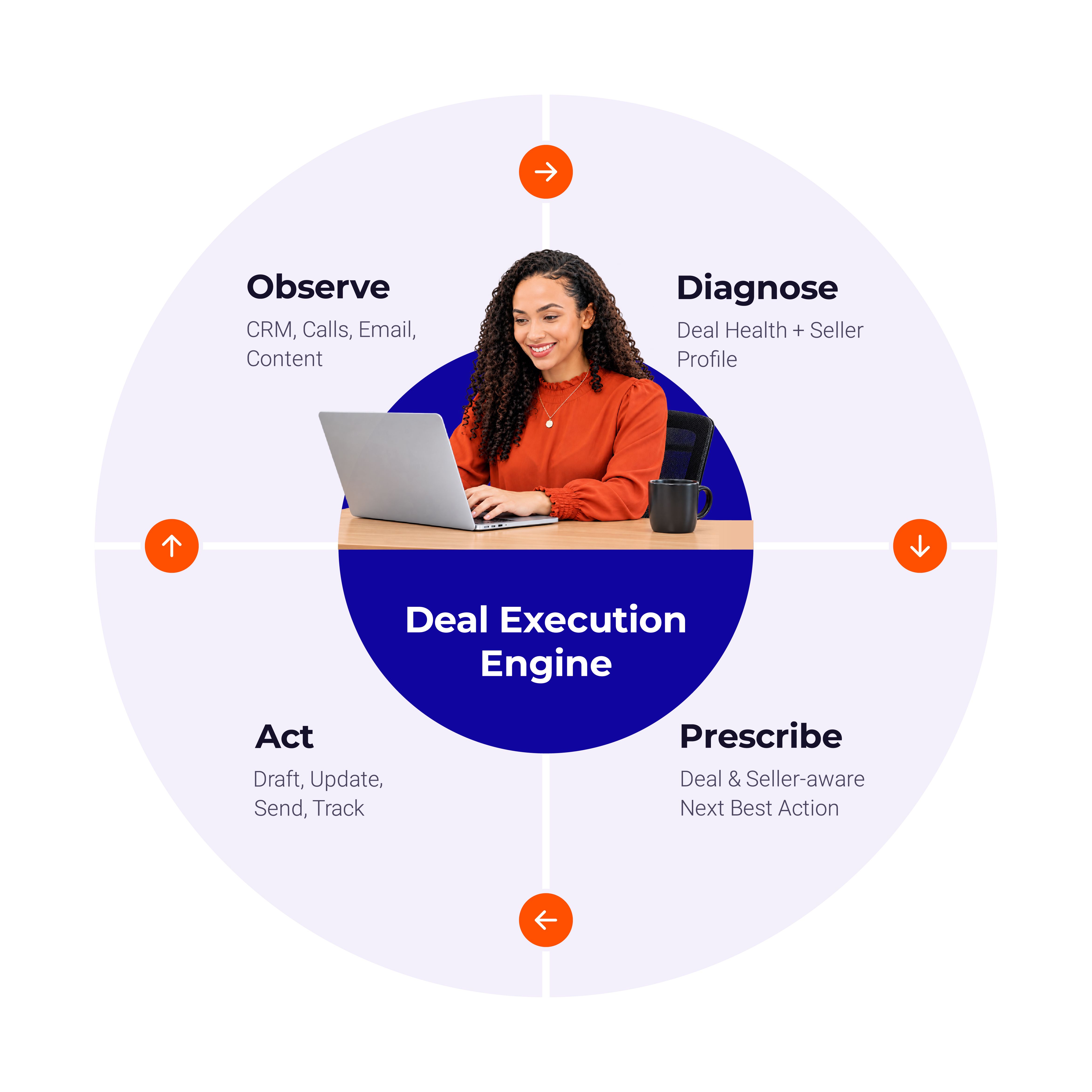
- It observes. It brings together the signals that live apart: CRM, calls, email, content, the digital sales room, and buyer engagement, into one read on the deal.
- It diagnoses. It assesses deal health against the seller's profile, momentum, stakeholder coverage, value alignment, solution fit, and where the risk is building, all in real time.
- It prescribes. It weighs the deal and the seller together to surface the next best action, grounded in real signals, approved content, and approaches that have worked before.
- It acts. It puts that action in the seller's hands where they already work, drafting the email, personalizing the content, updating the deal room, and tracking what lands.
Then the loop closes. Each completed deal teaches the engine something, so the next diagnosis is sharper than the last. The guidance doesn't start from scratch. It compounds.

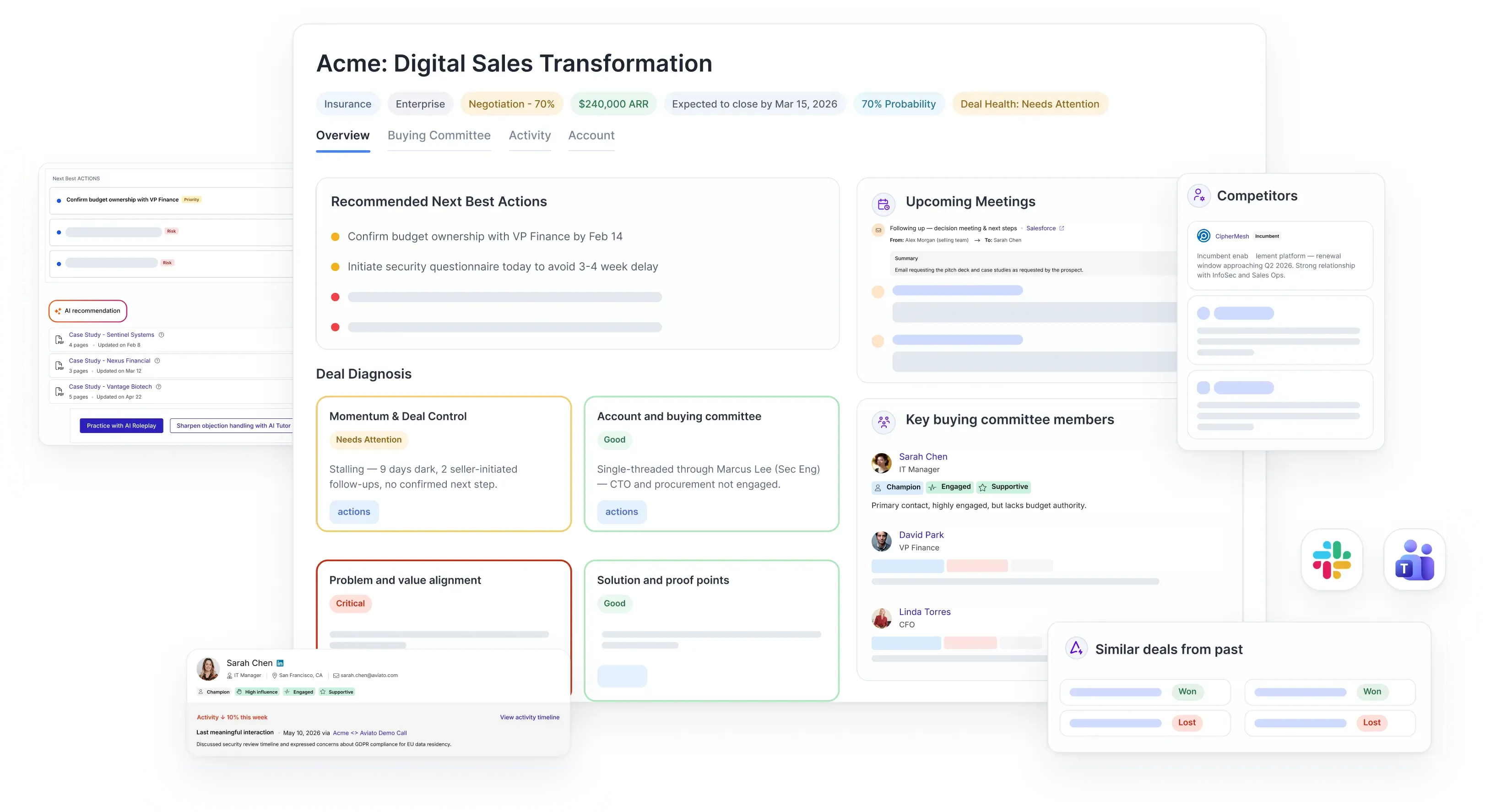
See what matters in every deal: A single view of deal diagnosis, risk, and next steps
- Priorities and risks surfaced upfront - know where to focus without digging through dashboards.
- A structured read on every deal - momentum, stakeholder coverage, value alignment, solution fit, and risk.
- Every insight you can drill into - what's driving a risk, why it matters, and what to do next.
- Deal health across the pipeline - spot trends and outliers without opening each deal.
Remember the six to ten stakeholders from earlier? This is where they stop being a risk no one can see. The same view maps the buying committee:
- who holds influence
- where each person stands
- what they actually care about.
It surfaces the competitors in play and the objections forming around them before they harden. The crowded room the deal has to move through becomes something the rep can navigate, not just worry about.
Is AI deal guides just deal guidance with Gen AI bolted on?
No, but it's a fair question. A bolted-on AI can only ever see the deal, because the deal is all it's wired into. It can summarize a call and draft a follow-up. What it can't see is the person being asked to act, their history, their strengths, where they've struggled before. That seller context isn't something you staple on afterward. It comes from knowing how your reps actually sell, and it's the difference between guidance that sounds smart and guidance that fits.
Here's where that shows up.
- Behavior Intelligence™
This is where AI Deal Guides reads the seller. Its Behavior Intelligence combines a rep's skills, behaviors, coaching history, and field execution with the deal context, so the recommendation is calibrated to the specific deal and the specific rep working it. The guidance fits the situation and the person in it.
- Real-time deal context
AI Deal Guides draws on seller knowledge and continuously evolving deal context from calls, emails, buyer engagement, and stakeholder interactions. Reps no longer spend hours piecing together information across systems. They get guidance grounded in the deal’s current state.
- In-flow execution
Tool-hopping is one of the biggest drains on rep productivity. AI Deal Guides ends it by letting reps act on insights where they appear. It can draft the email, update the deal room, and personalize or share content without leaving their workflow. The guidance comes to the rep instead of sending them off to find it.
- Grounded in proven playbooks
Every recommendation is grounded in your approved content and the patterns behind deals you've already won. There's no room for AI guesswork, because the guidance doesn't invent a next step; it draws on how your organization actually closes. A proven approach, applied to the deal stage.
- Proactive manager coaching
Because AI Deal Guides already reads the seller alongside the deal, managers don't just see that a deal is at risk. They see why. Whether it's a stakeholder who's gone quiet or a value point that never landed in the last call, it's surfaced through the deal summary and stakeholder activity.
That turns coaching from hindsight into intervention. Instead of reviewing what went wrong after the deal is gone, a manager coaches the rep on the specific gap while the deal is still live and still winnable. It's the answer to finding out about the risk too late.
- Intelligence that compounds
The system learns from how deals turn out. Each closed deal sharpens the recommendations for the next one, so the guidance improves the longer your team uses it.
One last thing, because it's the real answer to the question in the header. None of this is stitched together from separate tools. Built natively on Mindtickle ElevateOS, AI Deal Guides already connects enablement, conversation intelligence, and seller performance in one place. That's why it can read the seller and the deal together. The seller context isn't imported from somewhere else; it's already there, on the same platform the guidance runs on. A bolted-on AI can't do this, because it has nothing to read the seller from. ElevateOS makes both possible, and it lets this run with the security, explainability, and enterprise controls you'd put in front of your board.
How AI Deal Guides serve the three levels of the enablement function
A tool that helps one role is a utility. A system that helps the whole function is leverage. The difference is whether the value stops with the user or compounds across the organization.
AI Deal Guides is built for the second. The same deal execution engine, reading each deal and the seller working it, serves the rep, the manager, and the revenue leader differently, and the value at each level feeds the one above it.
For the seller: know what to do and do it now
For the rep, the real job has always come wrapped in busywork: chasing signals across tools, rebuilding context deal after deal, figuring out the next move alone. AI Deal Guides clears that away and puts what the deal needs where the rep is already working.
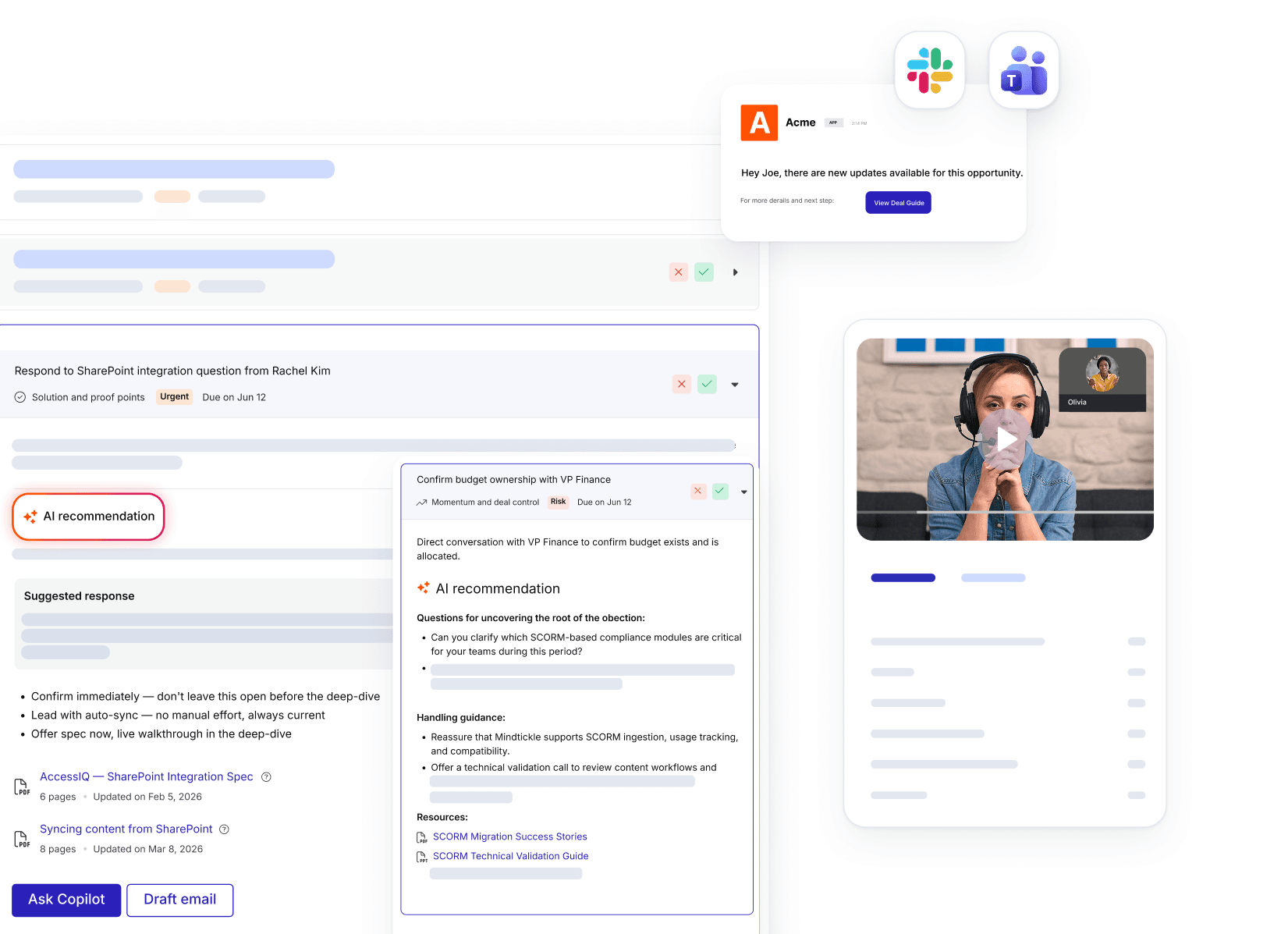
Actions and content built for the deal and the seller
- Prioritized next best actions - what to do next and what matters most.
- Guidance fit to the deal and the rep - shaped by the situation in front of them.
- Content and competitive context in one place - the right material when it matters.
- Lessons from similar winning deals - proven approaches applied to the deal in front of you.
📊 Impact: The rep spends less of the week piecing context together and more of it in front of buyers, acting on guidance built for the situation they're actually in.
For the manager: coach before it's too late
Managers have rarely had a reliable, timely view of what's happening inside each deal to coach reps effectively. Now, every rep interaction generates signals that AI Deal Guides turns into actionable coaching insights while the deal is still active.
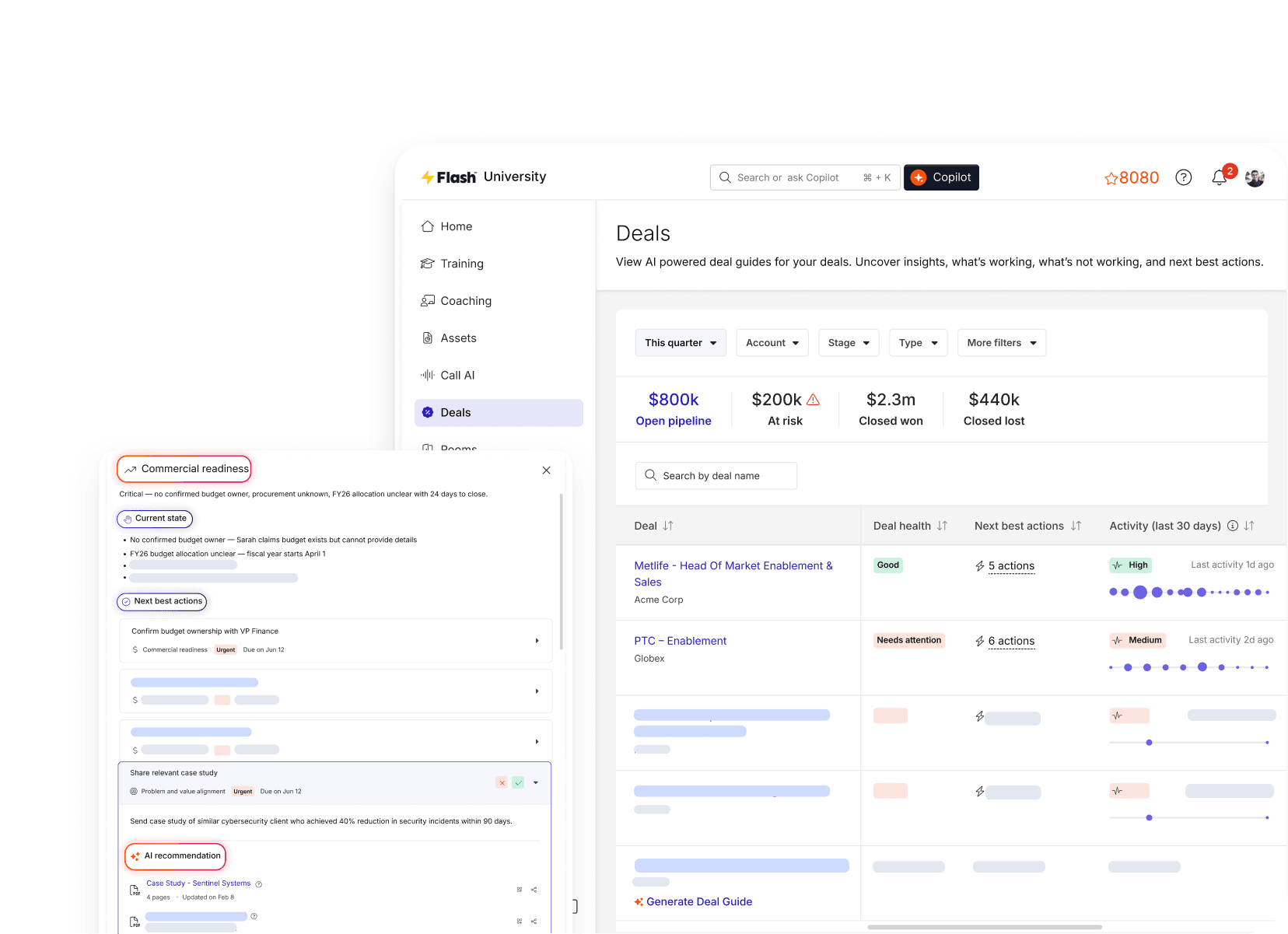
Pipeline visibility that leads to coaching, beyond inspection
- Deal health and risk across the pipeline - see what matters without opening every deal.
- Activity patterns across deals - catch follow-up gaps and engagement issues early.
- Deal signals linked to coaching - focus where intervention changes the outcome.
- A read on what drives outcomes - what's working across deals and teams.
🏅 Value: This is where the seller's execution becomes the manager's leverage: a clearer, earlier read on where a manager's attention will change the outcome, while the deal is still live.
For the revenue leader: see why deals move, not just that they moved
At the top, the question changes. You don’t need the next action on a single deal; you need to know why deals stall across the business, and whether the pipeline the team is forecasting is real.
Deal Guides gives you execution visibility grounded in buyer behavior, not rep optimism, so forecasts rest on what's happening in deals rather than what's hoped for. It shows execution gaps across teams, territories, and pipeline in one view. And because the system learns from how every deal turns out, each closed deal sharpens the guidance on the next.
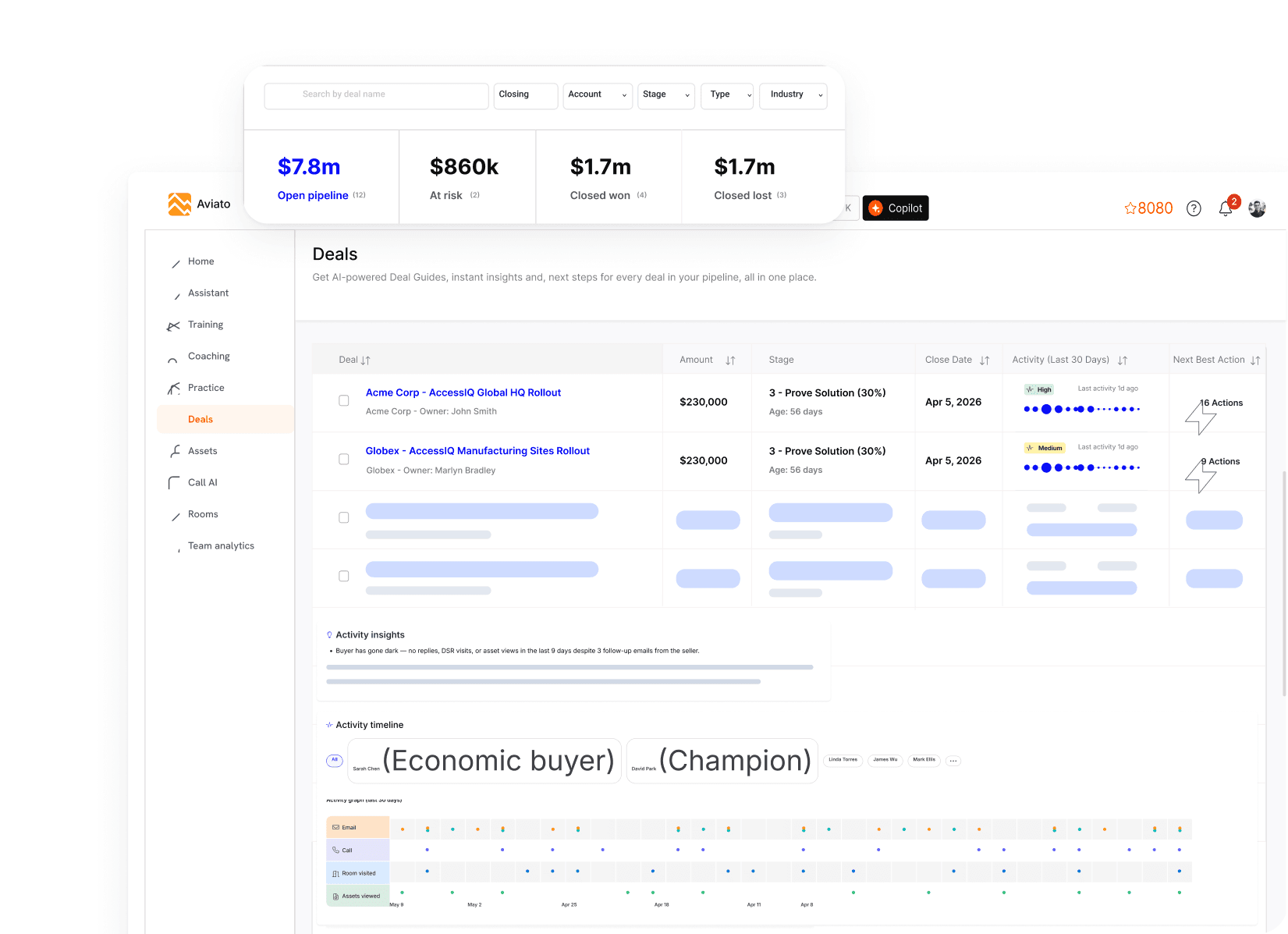
What keeps the guidance trustworthy
- It's shaped by your business, not a generic model. It's set up around your buyers, your personas, and your sales methodology, so the guidance reflects how your organization actually sells.
- The seller stays in control. AI Deal Guides recommends; the rep decides. Every action is theirs to take, change, or pass on. Nothing fires on its own.
- Every recommendation is explainable. Each comes with the underlying signals, sources, and reasoning, giving reps, managers, and auditors the transparency they need to trust and act on AI-generated guidance.
- It meets enterprise and regulatory standards. AI Deal Guides is ISO 42001-certified and aligns with the EU AI Act, along with the security and audit controls you'd expect before putting AI in front of leadership.
📌 Do you need AI Deal Guides?
Stage duration on qualified deals can help you decide. Pull the share of your qualified pipeline sitting in a stage longer than expected. If a meaningful slice of your deals is stuck past where they should be, and no one flags it until the deal has already stalled, you have a visibility-to-action gap. The signal was there. The response came too late. That gap is what the AI Deal Guides closes.
What beta teams are actually using AI Deal Guides for
We expected the pilot to tell us whether AI Deal Guides worked. What it also told us was where teams reach for it first. A few patterns showed up across nearly every beta account, and they weren't always the ones we predicted.
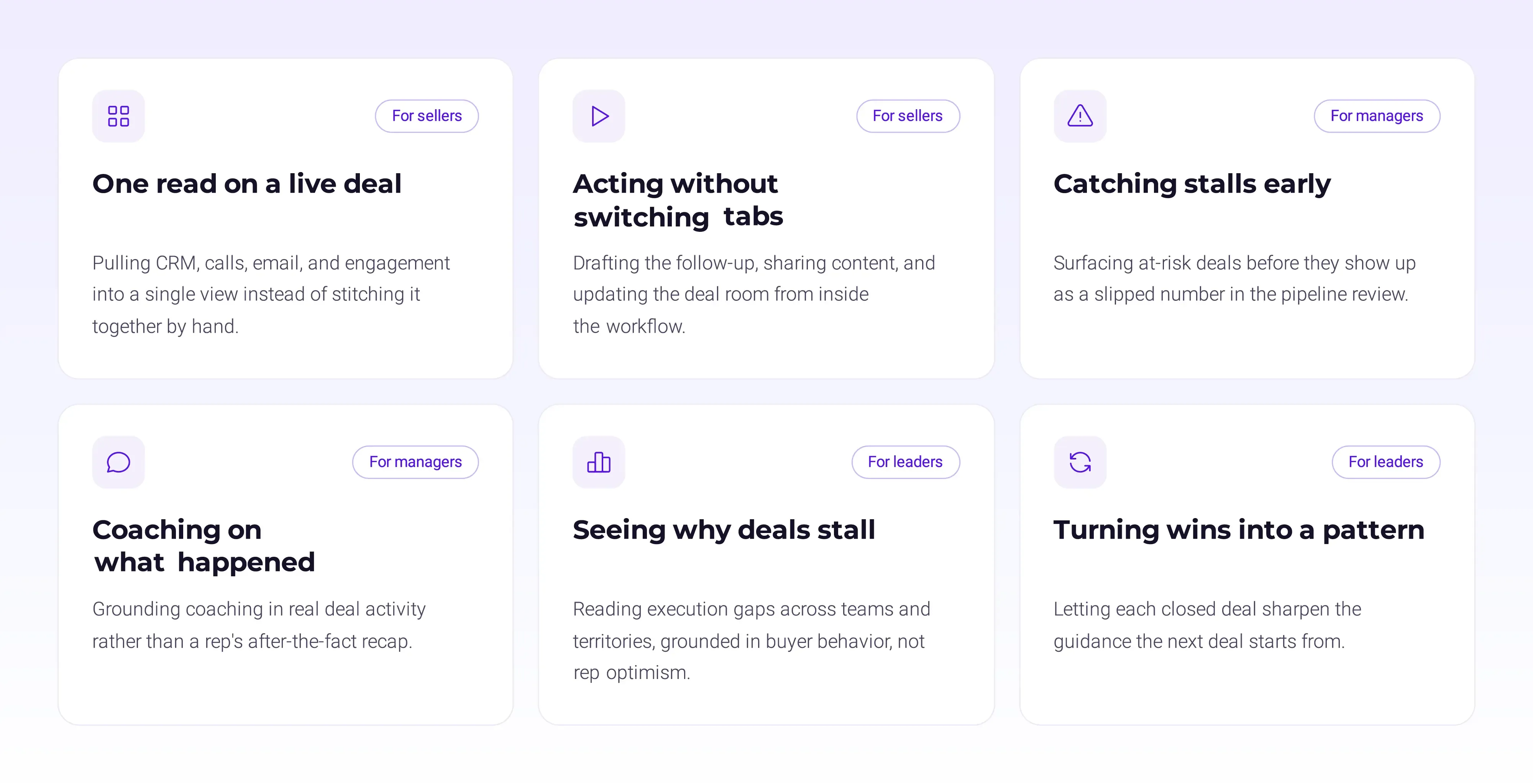
How to get started with AI Deal Guides (+The readiness checklist)
AI Deal Guides reads the deal and the seller working it. How much value you unlock depends on what your organization already has in place. Check what's true for you, and the gaps worth closing will surface as you go.
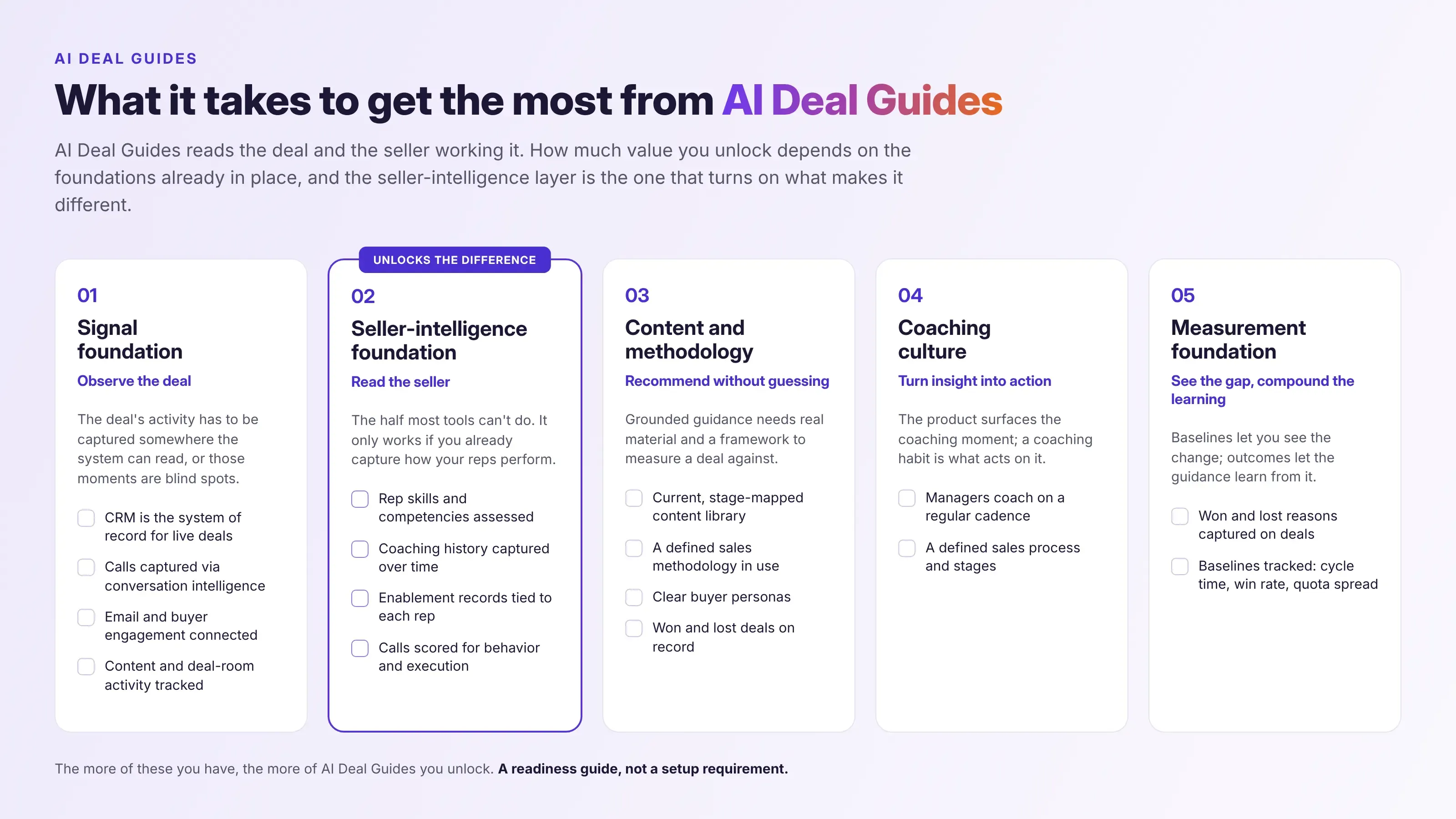
Get in early
Every deal your team runs generates the signals that could guide it. The question was never whether the information exists. It's whether anyone acts on it in time, and whether the guidance fits the rep being asked to act.
That's the whole idea behind AI Deal Guides. It reads the deal and the person closing it, and turns that into the next move, in the flow of the work, sharper with every deal that closes. It runs on the signals and systems your reps already use, so seeing it work doesn't wait on a rollout.
The cost of the gap is already in your numbers: stalled deals, slipped quarters, reps carrying weight the rest of the team can't. It shows up whether or not it has a name.
The fastest way to know what closing is worth is to watch it run on your own pipeline, not a demo dataset. Bring a deal you’re not sure about. Let AI Deal Guides show you what it sees.
FAQs on AI Deal Guides
About the Author
Lead Content Marketer
Jayadeep brings over a decade of experience in B2B content and product marketing, with expertise in editorial leadership, messaging strategy, and agency management.
He has built and scaled content operations, led agency partnerships, and collaborated across marketing, product, and demand generation teams to deliver integrated campaigns. His "process-first, execution-next" philosophy has made him a trusted resource at Mindtickle, where he helps shape content strategy, thought leadership programs, and flagship marketing initiatives.
Subscribe to the blog
Get the latest sales enablement tips, guides, and industry best practices delivered to your inbox. Unsubscribe anytime.